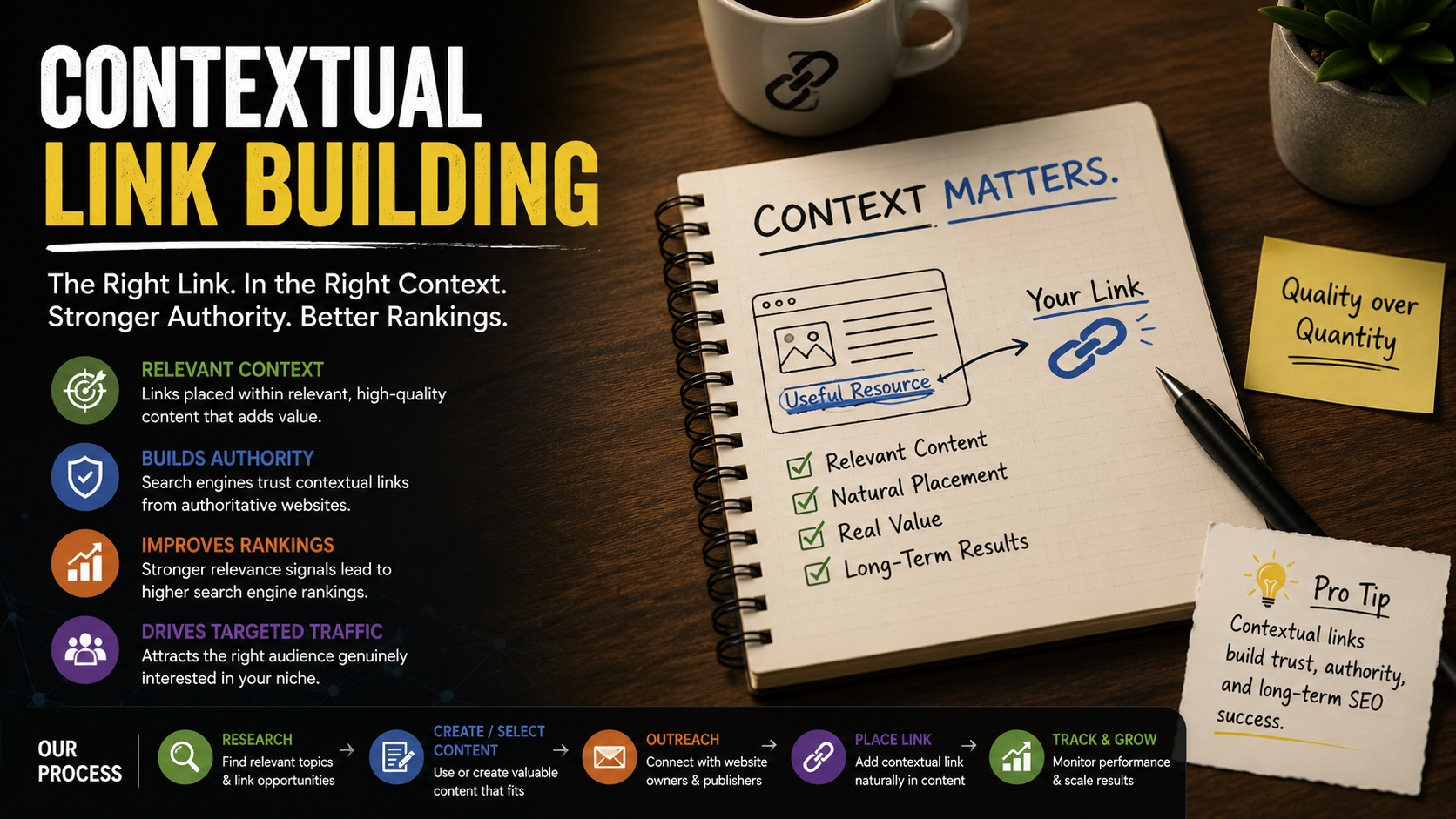
Contextual link building deserves serious attention from local and niche businesses that often assume high-quality backlinks are reserved for large national brands with big marketing budgets. In reality, a handful of genuinely relevant, well-placed contextual links can meaningfully outperform dozens of generic mentions, making contextual link building one of the most efficient investments a smaller business can make in its online visibility.
This playbook explains what contextual link building looks like in practice for local and niche businesses, the strategies that work best at a smaller scale, and how to avoid wasting time and budget on approaches that rarely move the needle.
What Contextual Link Building Means for a Local Business
Contextual link building refers to earning backlinks placed naturally within relevant written content, as opposed to generic directory listings or footer mentions. For a local business, this might mean a regional lifestyle blog naturally referencing your shop within an article about local recommendations, with a link placed directly in a sentence describing what makes your business worth visiting.
This kind of placement carries far more weight with search engines than a simple directory entry, because the surrounding content demonstrates genuine relevance and human endorsement rather than a paid or automated listing.
Why Contextual Link Building Matters More for Smaller, Niche Sites
Local and niche businesses typically have far fewer total backlinks than large national competitors, which means each individual link carries proportionally more weight. A single high-quality contextual link building placement on a respected regional publication can meaningfully shift rankings for a local business in a way that would barely register for a massive national brand with thousands of existing links.
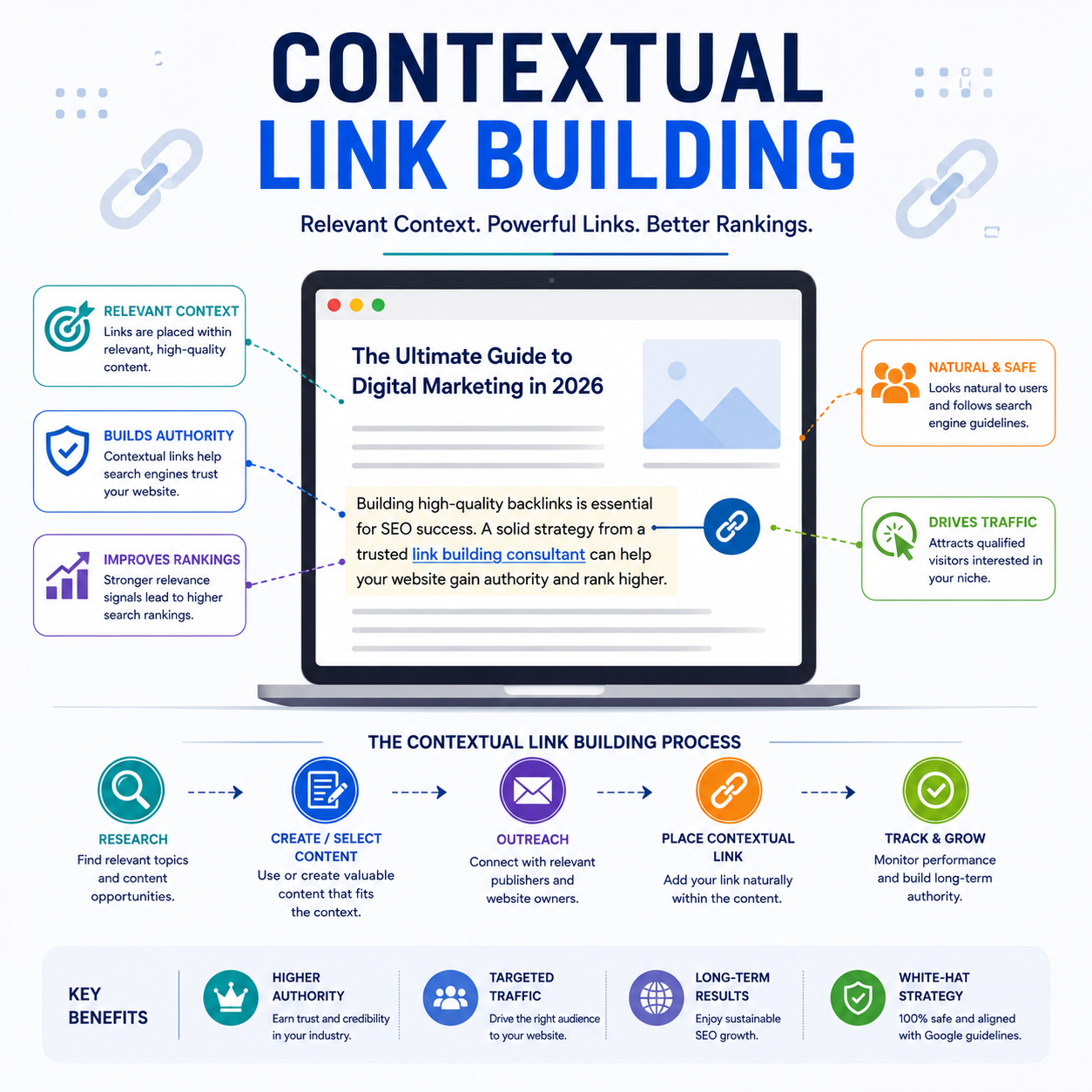
This makes contextual link building an especially efficient strategy for smaller businesses working with limited marketing budgets, since the return on a smaller number of well-placed links tends to be disproportionately strong.
Where Local Businesses Should Focus Contextual Link Building Efforts
Focusing contextual link building efforts on these categories tends to produce far stronger results for local businesses than chasing generic national media coverage that may not even be realistically attainable.
| Opportunity Type | Example | Why It Works |
| Local News and Lifestyle Sites | Regional publication covering neighborhood businesses | High relevance and community trust |
| Industry-Specific Blogs | Niche blog covering your specific product or service category | Strong topical relevance |
| Community Organization Pages | Local nonprofit or chamber of commerce websites | Builds local authority and trust |
| Local Event Coverage | Articles about community events you sponsor or attend | Natural, timely link opportunities |
| Supplier and Partner Websites | Businesses you work with regularly | Genuine, easy-to-secure relevant links |
Step-by-Step Approach to Contextual Link Building for Local Businesses
Step 1: Audit Existing Local Mentions
Before pursuing new contextual link building opportunities, check whether your business is already mentioned anywhere online without a proper link. These unlinked mentions are often the easiest wins, since the website has already shown willingness to reference your business.
Step 2: Build Genuinely Useful Local Content
Contextual link building works best when you have something worth linking to. A detailed neighborhood guide, an original local survey, or a genuinely useful resource related to your industry gives other local sites a real reason to reference and link to your content.
Step 3: Reach Out to Relevant Local Publishers
Personalized outreach to regional bloggers, journalists, and community organizations tends to perform far better than generic templates. Mentioning specific details about their publication and explaining exactly why your content would benefit their readers significantly increases response rates.
Step 4: Maintain Relationships for Repeat Opportunities
Because the pool of relevant local publishers is often smaller than in broader national markets, maintaining positive relationships after a successful placement can lead to repeated contextual link building opportunities over time, rather than a single one-off mention.
Common Mistakes Local Businesses Make With Contextual Link Building
Many small businesses waste time and money on generic, low-quality directory submissions, mistakenly believing this qualifies as meaningful link building. True contextual link building requires a link to sit within genuinely relevant written content, not simply be listed alongside hundreds of unrelated businesses in a directory with no editorial oversight.
Another common mistake is neglecting to check whether a potential linking site actually receives real traffic and maintains genuine editorial standards. A contextual link building placement on an inactive or low-quality site provides very little value, regardless of how naturally the link is embedded within the content.
How Contextual Link Building Complements Other Local Marketing Efforts
Contextual link building works best when combined with a broader local marketing strategy rather than treated as an isolated task. Sponsoring community events, participating in local business associations, and maintaining an active presence in your community naturally creates opportunities for genuine mentions and links, giving your contextual link building efforts a strong foundation to build upon.
Businesses that integrate their link building efforts with genuine community involvement tend to see more natural, sustainable results than those relying purely on cold outreach with no existing local presence or reputation.
Budgeting for Contextual Link Building as a Small Business
Because local and niche contextual link building typically targets a smaller pool of highly relevant publishers rather than large national media outlets, the overall investment required is often more modest than broader national campaigns. Many small businesses find that a consistent, moderate monthly effort produces steady, meaningful results over time without requiring a large marketing budget.
How Seasonal Timing Affects Local Contextual Link Building
Local publications often run seasonal features, holiday roundups, or event-based coverage throughout the year, and these moments can provide especially strong opportunities for contextual link building. A business that reaches out ahead of relevant seasonal content, offering a genuinely useful angle or resource, often finds editors more receptive than during quieter periods when there is no immediate content need driving their interest.
Keeping a simple calendar of upcoming local events, holidays, or industry moments relevant to your business can help you time your contextual link building outreach more effectively, increasing the likelihood of a successful, well-timed placement.
Why Consistency Beats One-Time Campaigns for Local Businesses
Many local businesses treat contextual link building as a one-time project, investing heavily for a month or two and then stopping entirely. This approach rarely produces the same lasting results as a smaller, ongoing effort maintained consistently over the course of a year. Search engines tend to favor websites that show steady, natural growth in their backlink profile rather than sudden bursts followed by long periods of complete inactivity.
Treating contextual link building as an ongoing part of your local marketing routine, even at a modest pace, tends to produce more durable rankings and a more resilient online presence than sporadic, high-intensity campaigns.
Frequently Asked Questions
Is contextual link building worth it for a very small local business?
Yes, often more so than for larger competitors, since even a small number of genuinely relevant local links can produce a noticeable ranking improvement for a business with a limited existing backlink profile.
How is local contextual link building different from national campaigns?
Local efforts prioritize regional relevance and community trust over sheer publication size, focusing on smaller, highly relevant sites rather than massive general-audience publications.
Can contextual link building help with local map pack rankings, not just organic search?
Yes, strong local backlinks contribute to overall domain authority and relevance signals that can positively influence both organic rankings and local map visibility.
How many contextual links does a local business typically need?
There is no universal number, but a steady, ongoing effort focused on quality and relevance tends to outperform businesses chasing a large volume of low-quality links.
Should a local business handle contextual link building alone or hire help?
Smaller businesses with limited time often benefit from outside help, while those with more bandwidth and existing community connections can successfully manage a modest contextual link building effort internally.
Conclusion
For local and niche businesses, contextual link building offers a genuinely efficient path to stronger search visibility, often producing outsized results relative to the effort involved compared to larger national campaigns. By focusing on relevant, community-connected publishers and maintaining genuine relationships over time, even a small business with a modest budget can build the kind of lasting authority that keeps customers finding them for years to come.
To discover more insights and explore our full range of resources, we invite you to visit our official website.